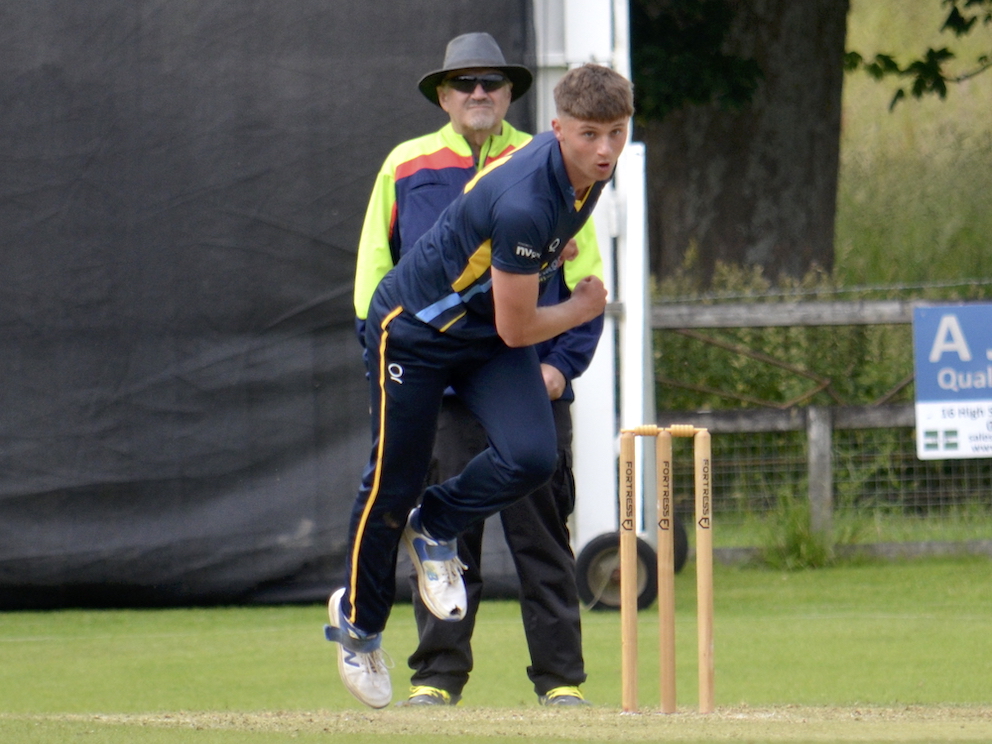
Devon still in hunt for place in Twenty20 knockout stages | One win over Dorset enough to keep Walker's men in touch | 'Everyone is excited about the challenge of our last two games' – skipper Lawrence Walker (pictured)

CONRAD SUTCLIFFE REPORTING
DEVON are still in with a slender chance of qualifying for the knock-out stages of the NCA Twenty20 Cup despite another round of inconclusive double-headers in qualifying Group Four.
Devon won once and lost once in back-to-back games against Dorset at Sandford, which gives them four match points from six games played in a five-team pool. Win-one, lose-one is a common theme of all the group games.
Although Devon are one of four counties level-pegged on two wins each – Cornwall with a perfect four from four are the odd ones out – Dorset and Herefordshire have two games in hand on them.
As the top three counties qualify for the Super12 knock-out stages next month there is still plenty to play for. Unbeaten Cornwall are one win away from definite qualification with four opportunities to obtain it. That leaves Dorset, Herefordshire, Wiltshire and Devon battling for the other two places.
When Devon play Herefordshire at Eastnor on June 29, nothing less than two wins will suffice. Lawrence Walker, Devon’s Twenty20 captain, has no qualms about what’s coming next.
“Everyone is excited about the challenge of our last two games,” said Walker.
“We have learnt a lot as a group throughout the competition thus far, so we will keep looking to build on those experiences.”
Dorset were comfortable 77-run winners in game one at Sandford after piling-up 195 for eight in their 20 overs.
Ten overs into the contest Dorset were 141 for one with Will Tripcony just out for 70 off 30 balls. Finn Gordon had been and gone for 59 by then.
Jon Triner (1-27), Harry Passenger (1-16) and Matt Whalley (2-25) slowed Dorset to a crawl in the second ten.
Opener Seb Linnitt (35) and Sam Read (30) were Devon’s main run-getters in a reply that expired on 118. Gordon (2-14) and Ethan Baker (4-17) posed problems for Devon.
A nine-ball opening over from Joe Carson yielded 17 runs for Devon – he went for 12 more when he came back later – but the ‘big overs’ needed were almost non-existent.
Game two was a much more exciting affair with both sides entering into the big-hitting ethos of Twenty20 cricket before Devon emerged six-run winners.
After Linnitt (27) got Devon up and running, Passenger (43), Walker (33) thudded the ball around the ground and out of it towards a final total of 188 for eight. Gordon probably needed counselling after Passenger whipped him for 20 in a seven-ball over.
Dorset were in danger of lapping Devon at halfway when they were 89 for two. Gordon got his revenge with 54 and Dylan Church was on the way to 66 off 37 balls.
Cornwood’s Ben Privett had the happy knack of taking a wicket with the first ball of his first two spells – Gordon being one of them.
Twenty-six to win from the last two overs is not far-fetched in T20 cricket – especially with Gordon on 53 not out at the time.
Church gave it a go, but 16 from the final over from Callum Harvey was a few too many. Church was dismissed going for a second successive six that would have tied the scores.
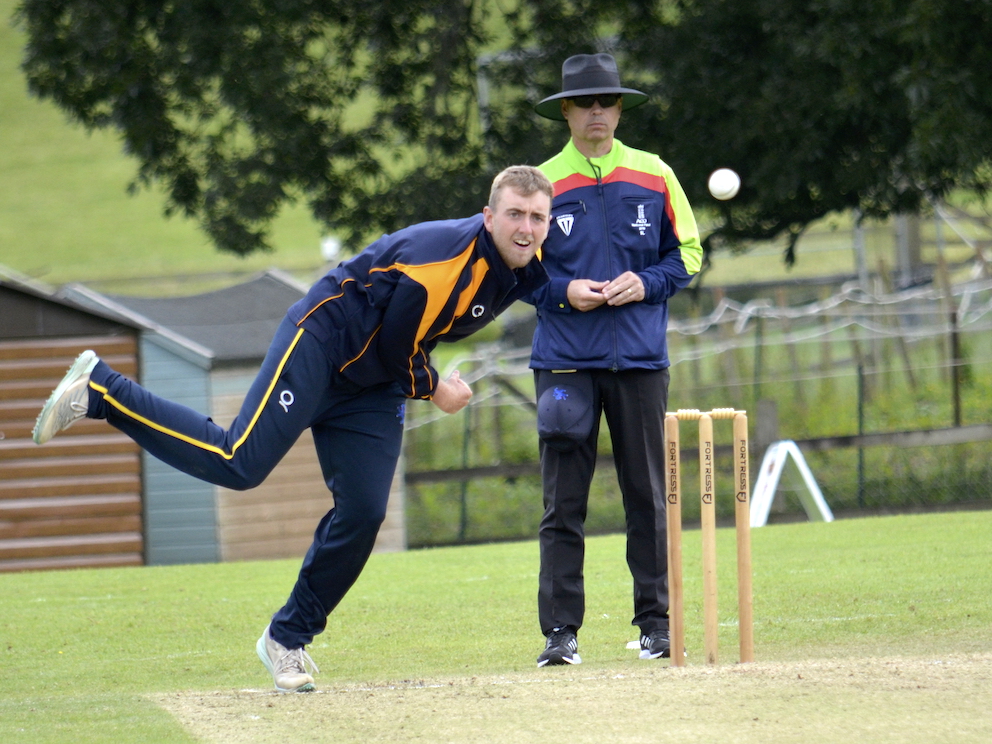 “We changed tactics in Game two by winning the toss and batting,” said Tim Western, Devon CCC’s performance director.
“There was more positive approach, and good partnerships at the start of the innings helped craft a competitive total.”
For Walker the aim for the double date with Herefordshire is to find the consistency that was lacking against Dorset.
“During parts of both games we played to the level we know we can consistently achieve as a team,” said Walker.
Western is clearly on the same page of the script as the captain, although he is looking at why consistency is hard to maintain?
“When we are hot we are very good. When we don't execute our skills or employ the right tactics, we lose key moments that hurt the team.
“In this quick-fire game format, you cannot afford to lose too many of those moments.
“As a coaching unit, we keep thinking about how we can recreate the type of environments to prepare our players better for the next level. Twenty20 cricket isn't played that much in Devon for adults – and if it is played the intensity is poor.”